
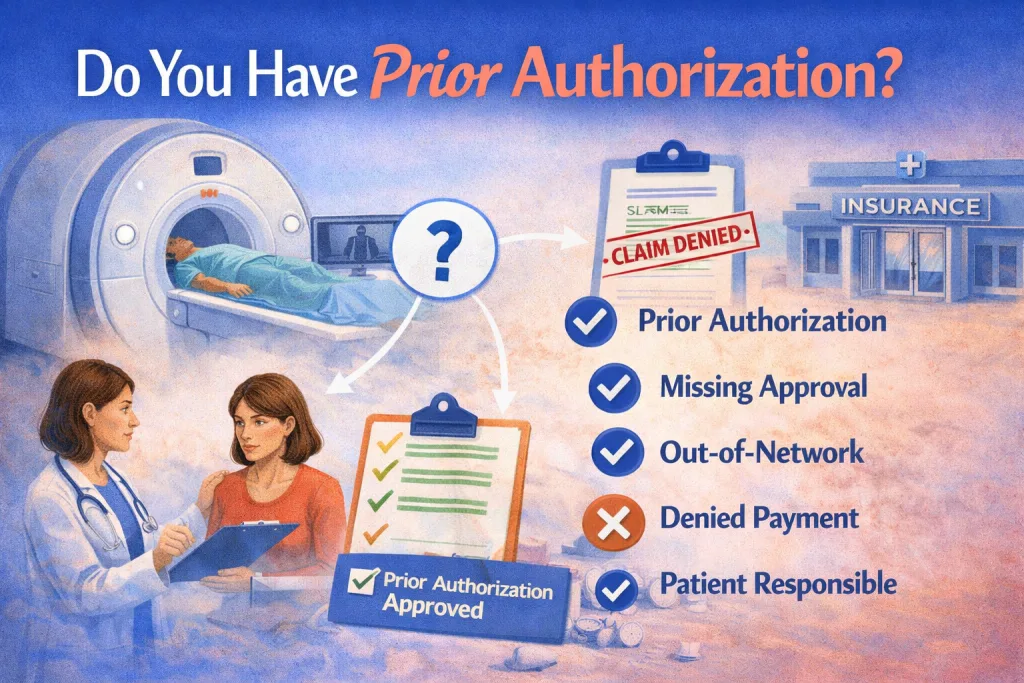
You’ve scheduled a procedure. Your doctor recommends it. Everything feels like it’s moving forward.
Then you hear:
👉 “We need prior authorization.”
Or worse…
👉 “This wasn’t authorized—your insurance may not cover it.”
Prior authorization (often called prior auth) is one of the most critical—and misunderstood—steps in healthcare. And when it’s missed, the consequences can be significant.
What Is Prior Authorization?
Prior authorization is a requirement from your insurance company that says:
“We need to review and approve this service before it is performed.”
It applies to:
- Imaging (MRI, CT scans)
- Surgeries and procedures
- Certain medications (especially specialty drugs)
- Rehab or facility admissions
👉 Without this approval, your insurance may deny payment, even if the treatment is medically necessary.
Why Insurance Requires Prior Authorization
Insurance companies use prior authorization to:
- Confirm medical necessity
- Ensure the treatment follows clinical guidelines
- Control costs by reviewing high-expense services
While this process is meant to create oversight, it often creates delays, confusion, and risk for patients when not handled correctly.
What Happens When Prior Authorization Is Missed?
This is where patients and families can be caught off guard.
Even if:
- Your physician recommended the treatment
- The service was appropriate
- The outcome was successful
👉 Insurance can still deny the claim
And that can leave you responsible for:
- Thousands of dollars in unexpected bills
- Appeals and administrative stress
- Delays in ongoing care
A Real-Life Scenario
A patient is scheduled for an outpatient MRI due to worsening back pain.
- The physician orders the test
- The patient assumes everything is approved
- The MRI is completed
Weeks later, a bill arrives:
👉 $2,400 — Claim Denied (No Prior Authorization)
What happened?
- The imaging center did not obtain prior authorization
- Insurance required approval before the test
- The claim was denied—even though the MRI was medically appropriate
Who Is Responsible for Prior Authorization?
This is one of the biggest areas of confusion.
Prior authorization may be handled by:
- The physician’s office
- The facility performing the service
- Occasionally, the patient is expected to confirm
👉 But here’s the reality:
If it’s missed, the patient is often the one financially responsible
How to Protect Yourself
These steps can help you avoid unexpected denials:
✔ Ask the Question Early
“Does this require prior authorization?”
Don’t assume it’s already being handled.
✔ Confirm It Has Been Approved
- Ask for confirmation
- Request the authorization number if possible
✔ Verify with Your Insurance
Call and ask:
- “Has this service been authorized?”
- “Is this provider in-network?”
✔ Keep Documentation
- Write down names, dates, and reference numbers
- Save any authorization confirmations
What If It Was Already Missed?
If a service was performed without prior authorization:
- Contact your provider’s office immediately
- Ask if a retroactive authorization can be requested
- Request medical records to support an appeal
- File an appeal with your insurance company
👉 Some denials can still be overturned—but timing matters.
Where Patient Advocacy Makes a Difference
At Stepping Stone Advocacy Services, this is one of the most common—and preventable—issues we see.
We help patients and families:
- Verify prior authorizations before care
- Identify gaps before services are performed
- Coordinate between providers and insurance
- Navigate denials and appeals when issues arise
Because prior authorization isn’t just a formality—
👉 it’s a critical checkpoint that protects both your care and your finances
Final Thought
In today’s healthcare system, it’s not enough for a treatment to be recommended.
It must also be:
✔ Documented
✔ Approved
✔ Aligned with your insurance plan
Understanding prior authorization gives you something powerful:
👉 The ability to prevent problems before they happen