
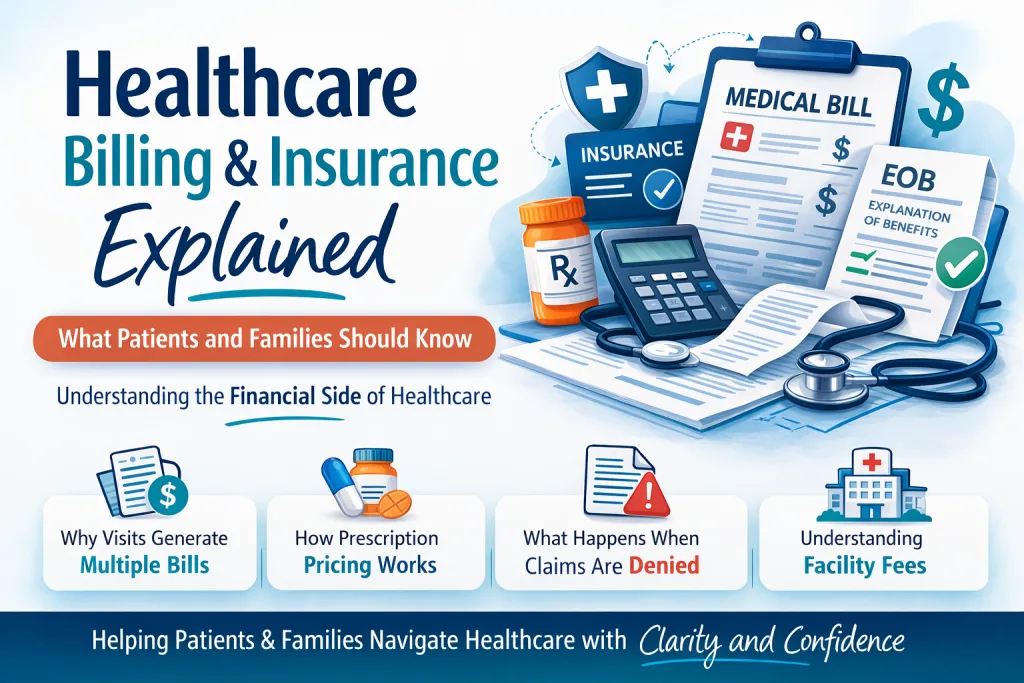
What Patients and Families Should Know About the Financial Side of Healthcare
April Education Series from Stepping Stone Advocacy Services
Healthcare can already feel overwhelming during the best of times. Between doctor visits, hospital stays, diagnostic testing, and follow-up appointments, patients and families are often focused on understanding diagnoses and coordinating care.
Then the bills begin to arrive.
Multiple statements from different providers. Insurance explanations filled with unfamiliar terminology. Questions about deductibles, copays, coinsurance, or denied claims.
Even patients with strong insurance coverage can find themselves confused by how the financial side of healthcare works.
At Stepping Stone Advocacy Services, part of our mission is helping patients and families better understand how the healthcare system functions — including the insurance and billing processes that often happen behind the scenes.
Because healthcare is complicated enough — understanding the system shouldn’t be.
Why Medical Billing Can Feel So Confusing
Unlike many services people encounter in everyday life, healthcare billing rarely comes from a single source.
A single medical visit may generate multiple claims and statements. For example, one hospital visit may involve charges from:
- the hospital or facility itself
• the physician or physician group
• radiology services
• laboratory testing
• consulting specialists involved in care
Each of these providers bills separately for the services they provide. These claims are then submitted individually to the insurance company and processed according to the patient’s specific insurance plan.
Because of this structure, it is common for patients to receive multiple statements weeks or even months after a medical visit.
Understanding that this process is normal can help reduce confusion when reviewing medical bills.
The Role of Insurance in the Billing Process
Insurance companies review medical claims based on the rules within each individual insurance plan.
Several factors influence how a claim is processed, including:
- whether the provider is in-network
• whether prior authorization was required
• whether the service meets medical necessity guidelines
• whether the patient has met their deductible
• the patient’s copay or coinsurance responsibility
Because of these variables, two patients receiving the same service may have very different financial outcomes depending on their insurance coverage.
Understanding how these factors influence claims can help patients better interpret the documents they receive from both healthcare providers and insurance companies.
A Behind-the-Scenes Part of Patient Advocacy
Patient advocacy is often associated with helping families understand diagnoses or communicate with healthcare providers. While that is certainly an important part of the work, another aspect of advocacy happens quietly behind the scenes.
At Stepping Stone Advocacy Services, our approach includes both clinical insight and administrative expertise.
Our Nurse Patient Advocates help families navigate medical information, coordinate care, and support healthcare decision-making.
Working alongside them are members of our team who specialize in insurance navigation and medical billing review. These team members help interpret insurance explanations, clarify billing questions, and identify potential issues related to claims processing.
By looking at both the clinical and financial sides of healthcare, we help patients and families better understand the full picture of their care.
Our April Education Series
Throughout the month of April, our team will be sharing a series of educational insights focused on Healthcare Billing and Insurance Explained.
Members of our team who specialize in insurance and medical billing navigation will be discussing some of the most common questions patients and families encounter, including:
✔ Why one medical visit can generate multiple bills
✔ How prescription drug pricing works
✔ What happens when an insurance claim is denied
✔ How facility fees can appear on medical statements
These educational discussions are designed to help patients and caregivers better understand how healthcare billing works so they can approach the system with greater clarity and confidence.
Education Empowers Patients and Families
When patients understand how healthcare billing and insurance processes work, they are better prepared to:
- review medical bills with confidence
• ask informed questions
• identify potential billing issues
• make decisions about their healthcare and financial responsibilities
Healthcare systems are complex, but education can help make them more understandable.
At Stepping Stone Advocacy Services, we believe informed patients and caregivers are better equipped to navigate healthcare with knowledge and confidence.
Frequently Asked Questions About Healthcare Billing
Why did I receive multiple bills for one hospital visit?
Healthcare services are often provided by several professionals and departments. The hospital, physicians, radiologists, laboratories, and specialists may all bill separately for their portion of care.
What is an Explanation of Benefits (EOB)?
An Explanation of Benefits is a document sent by your insurance company that explains how a claim was processed. It shows what the provider billed, what the insurance paid, and what portion may remain the patient’s responsibility.
Does a denied insurance claim mean I must pay the full bill?
Not always. Claims may be denied for several reasons, including missing documentation or the need for prior authorization. In many cases, claims can be corrected, resubmitted, or appealed.
Why are some doctor visits billed with a facility fee?
Some physician practices are owned by hospitals or health systems. When care is provided in these settings, the visit may be billed as a hospital outpatient service, which can include a facility fee in addition to the physician’s professional charge.
Have Questions About Medical Bills or Insurance?
Healthcare billing and insurance processes can sometimes raise questions for patients and families.
If you are navigating a complex healthcare situation and need guidance understanding medical bills, insurance explanations, or care coordination, patient advocacy services can provide additional support and clarity.
At Stepping Stone Advocacy Services, we are committed to helping patients and families better understand the healthcare system so they can make informed decisions.
We invite you to continue following our April education series as we share practical insights about healthcare billing and insurance navigation.
📍 Stepping Stone Advocacy Services
Helping patients and families navigate healthcare with clarity, knowledge, and confidence.